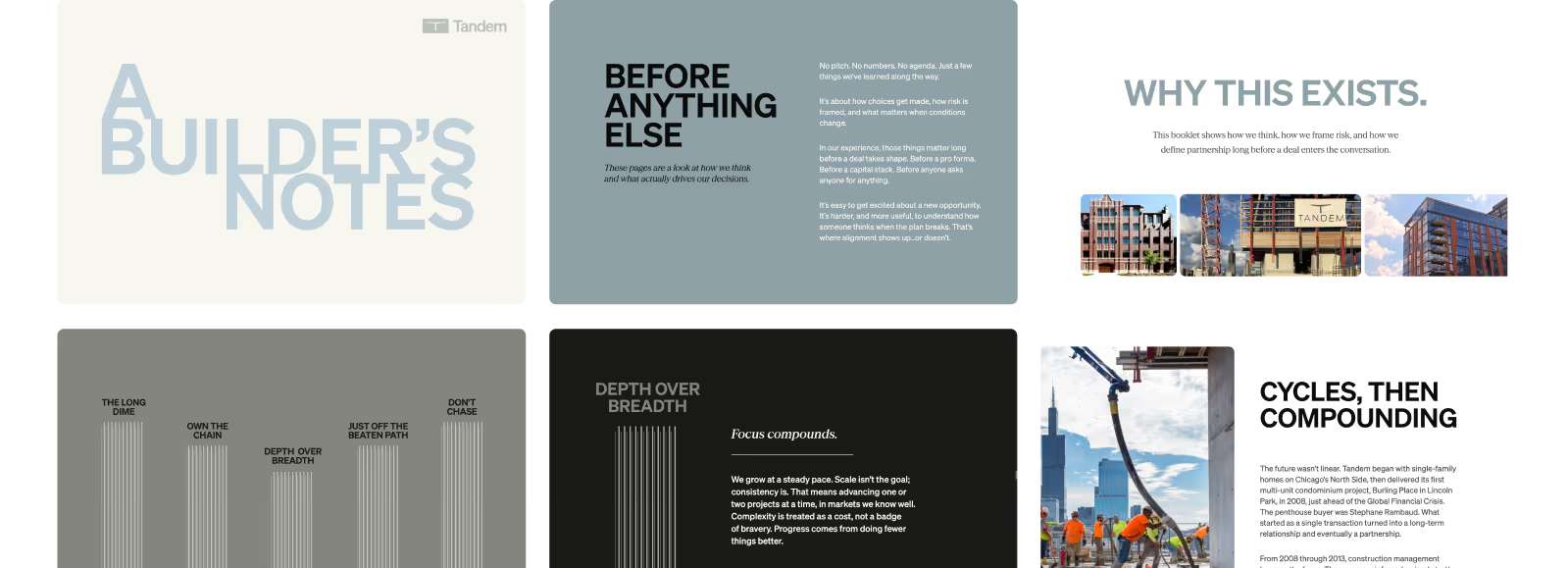
A Builder’s portal
Explore how Tandem shapes strategy, approaches risk & defines partnerships.
A Builder’s Notes laid out our mindset.
The principles, the tradeoffs, and the habits that shape how we think about risk and the projects we choose to pursue. That foundation gets set long before the work begins. Before a site is locked up. Before any capital is put on the line. Before a foundation is poured.
A Builder’s Work is where that mindset gets tested.
Not in theory, but in the real world.
Every project shows up with constraints and lessons. Facts change. Markets pivot. Timelines adjust. You still have to decide, often without the comfort of seeing the whole picture clearly, and without knowing which detail will end up mattering most.
That is why hindsight can be misleading.
But the work does not happen in hindsight. It happens in real time, with incomplete information and competing pressures. Even after the fact, risk is not something you can fully measure or reduce to a clean number.
You can revisit decisions.
But you cannot turn uncertainty into certainty just because the story now has an ending. There are known unknowns, and there are unknown unknowns.
What follows is the work itself. Not as a highlight reel, but to see if the projects we’ve completed and the lessons learned along the way align with how you think capital should be treated and projects should be managed.
Before jumping in, a quick recap of what we do.
Tandem develops, builds, and operates.
Ground-up Class A, market-rate multifamily and mixed-use infill projects in Chicago and the west coast of Florida. When practical, we target sites just off the beaten path and manage the value chain in-house from construction through property management, so execution stays tight and accountability stays clear.
We are not short-term merchant builders.
We underwrite for durable, predictable cash flow over the long term. We think in years, not quarters. Our capital stack is built around long-dated, fixed-rate debt and patient equity, which allows us to prioritize yield, tax benefits, and downside protection over headline IRR.
We pursue only one or two projects at a time and typically deploy $10–30 million of equity per project, with total capitalization up to $125 million. To date, our equity has come from our network of family and friends, partners who share our view that this is about staying rich, not getting rich.
Our track record reflects a slightly contrarian posture.
We slow down when pricing runs ahead of fundamentals and lean in when the risk-reward resets. We do not assume we can time cycles perfectly. We assume we cannot. We structure deals to work without perfection, because conditions rarely are. We focus less on being right and more on not being wrong. This approach has helped us avoid the kinds of surprises that create friction.
To date, we have not lost a dollar of debt or investor equity, and we have never made a capital call to our investors – ever.
The work in practice.
At Tandem every project is unique, and lives in a different context, but every project begins with intentionality in how we approach the deal.
We always start with a development thesis – while more philosophical than a traditional business plan, it provides the entire vertically integrated team a guiding light that helps always know where we are going.
Mode Logan Square
Fully stabilized in less than 7 months at rents 22% higher than original underwriting.
Quantitative Outcomes
Above and beyond a 33% return on invested capital, our first project of real scale was delivered on time and on budget, with no capital calls, turning early skepticism into lasting credibility. The project was fully stabilized in less than 7 months at rents 22% higher than originally underwritten rents, allowing for favorable terms using long term agency debt and an initial interest-only term to allow for meaningful front-end cash distributions for investors.
Investment Thesis
This project was a builder’s bet on timing, onviction, and execution: we chose to go early into a neighborhood that was still developing, not after it was already proven, and bring high-quality, transit-oriented luxury product to the area using our construction experience to stay disciplined on cost, quality, and delivery, with the belief that if we built well in the right place before the market fully arrived, time would do the rest of the heavy lifting
Development Context
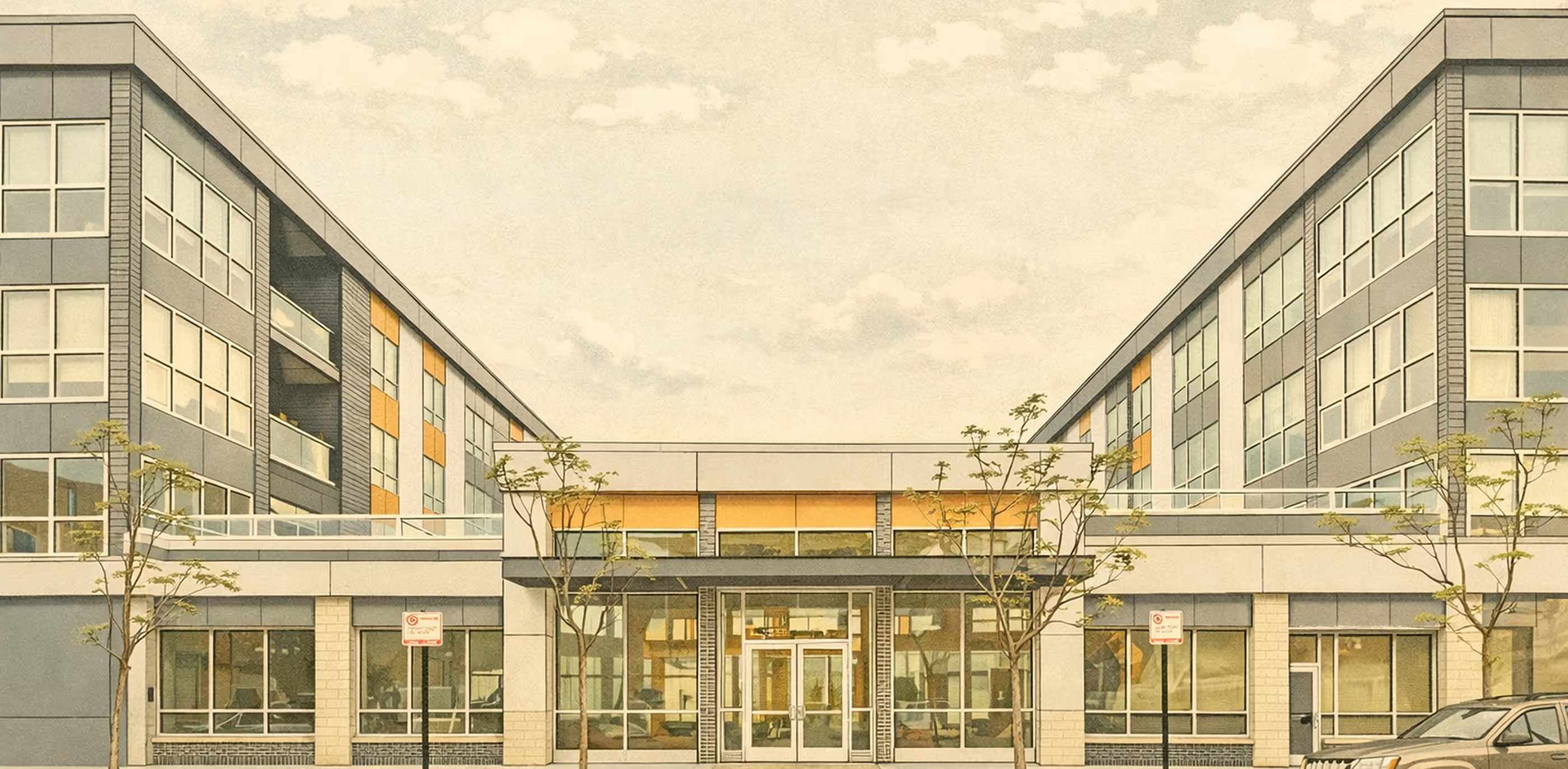
MODE Logan Square is a two-building, 78-unit mixed-use development built on the site of a former fine art storage facility with building origins in the early 1900s. A site right in the path of development, immediately adjacent to a CTA Blue Line stop, this redevelopment envisioned bringing a new energy to Logan Square before it was on many others’ radar.
Lessons Learned
By continually doing what we said we would, we gained community and political support that allowed us to make a meaningful step in our growth trajectory. We leveraged engagement with a receptive neighborhood group and built a lasting relationship with a progressive Alderman.
This removed entitlement risk and reduced superfluous construction costs by leading the local development community in TOD with a reduced parking count at a time when people were still talking about ‘minimums’. By earning community support, sequencing entitlements carefully, and delivering flawlessly, we turned early skepticism into lasting credibility.
Avenir
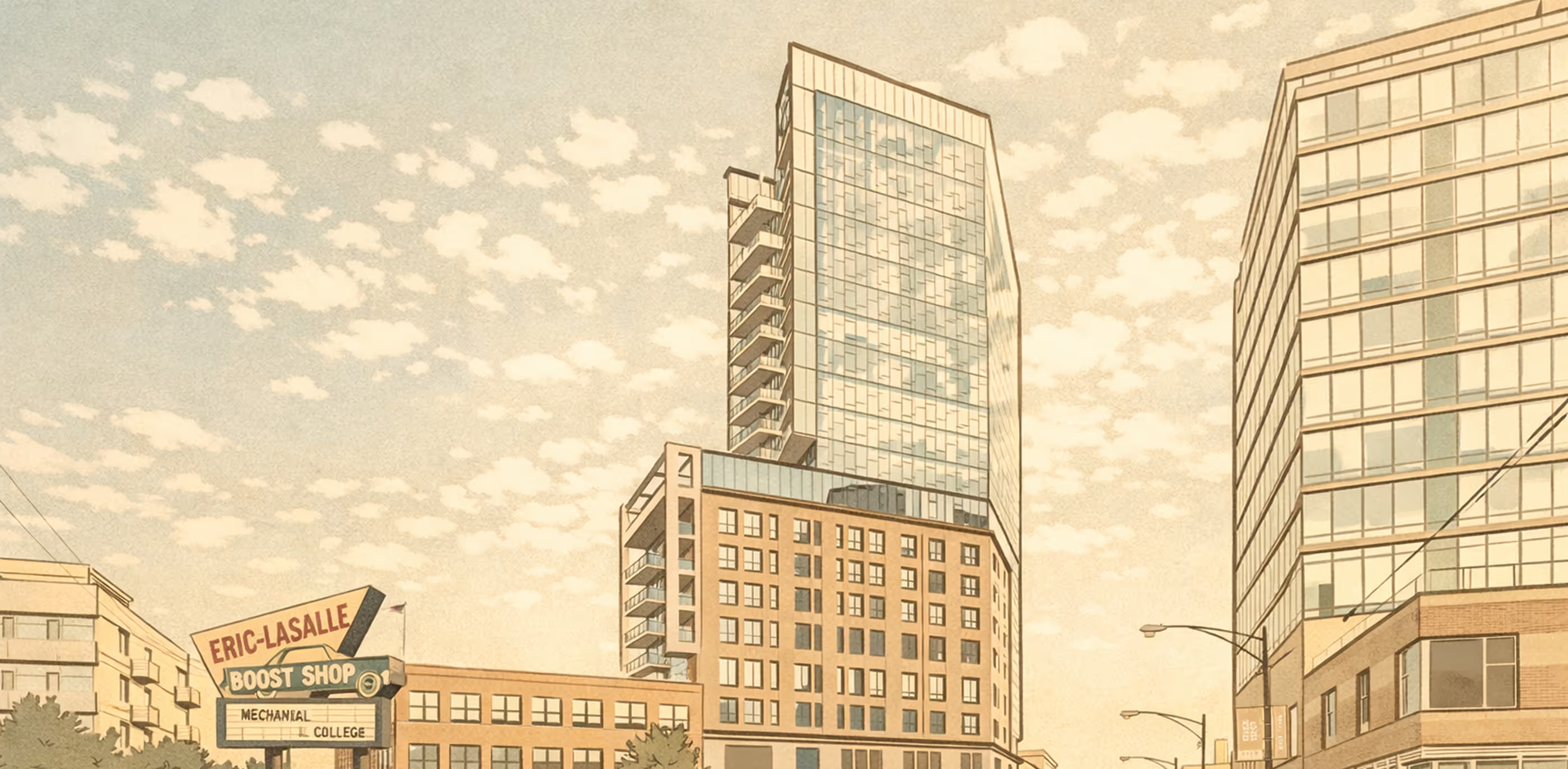
Development Context
We uncovered a timely zoning arbitrage opportunity inherent in the site's location, a fact not widely known to the greater development community. This allowed us to outbid more established firms and secure the site, understanding that significantly higher density was nearly assured. We managed the partial demolition of a historic brick-and-timber office building simultaneously with foundation work for a new 23-story tower, all while contending with the complications inherent with Chicago’s mass-transit Blue Line subway line running directly beneath.
Long-term thinking, legacy planning, and wealth preservation.
Investment Thesis
Create a skyline-defining high-rise that reflects long-term thinking, legacy planning, and wealth preservation for the long haul. Transition from a conventional construction loan into low-leverage, non-recourse permanent debt with a 35-year term so the asset can be held through cycles and maximize durable cash flow over time.
Quantitative Outcomes
Given the zoning we achieved, we acquired the site at a roughly 30% per-unit discount to the broader market, locking in an edge before shovels hit the ground. Since then, the project’s depreciation strategy has generated nearly $10 million in depreciation for the principal investor.
On the front end, the capital stack was structured to take advantage of a historically low-rate environment and the sponsor’s strong, debt-free balance sheet. We paired that with a boutique, customized line of credit that minimized cash invested up front, while using rate swaps to protect for interest rate risk and still allow the underlying securities to remain invested.
The long-term hold strategy added another layer of protection through 35-year fixed-rate, non-recourse HUD 223(f) financing at 2.66%. That structure does more than support a long hold. It is built to optimize for legacy.
Lessons Learned
We leveraged what we knew and adapted quickly where we didn’t. Tandem’s first experience with Type-1 tower construction brought new subcontractor partners and delivering under pressure. We saw firsthand that speed in execution is its own education. We also learned the true value of our partners who bet on us (it’s allowed us to skip a generation in our origin story) and the responsibility of honoring that trust.
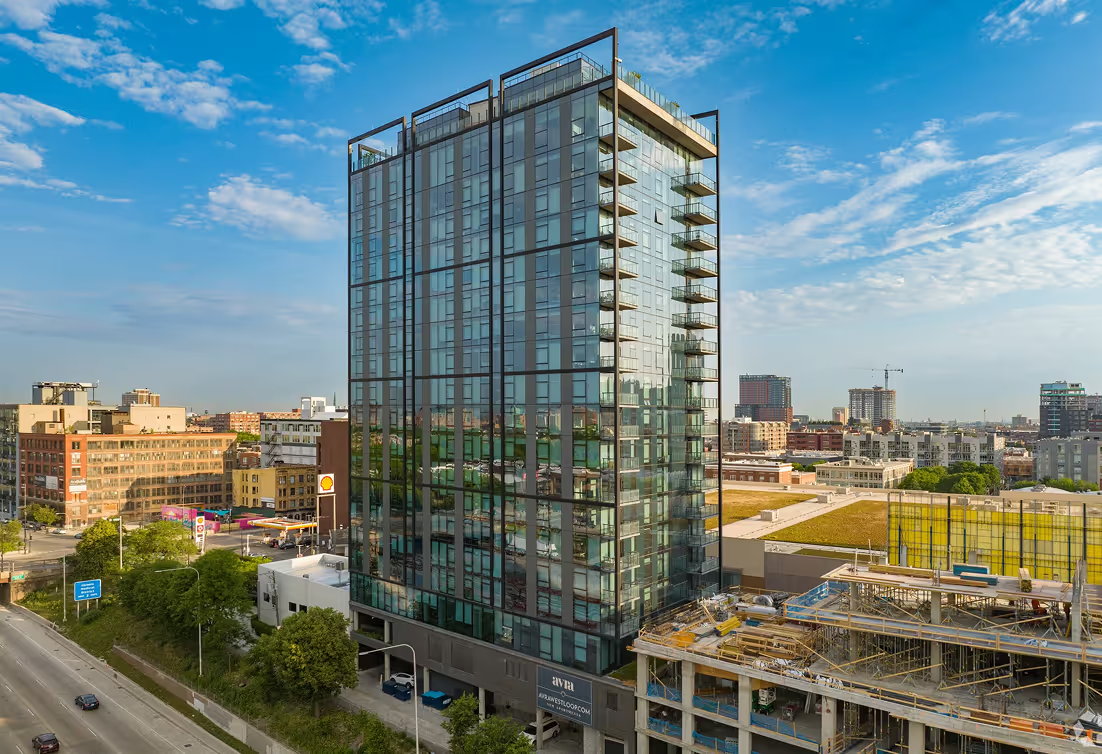
Avra
Even in volatile markets, disciplined execution wins.
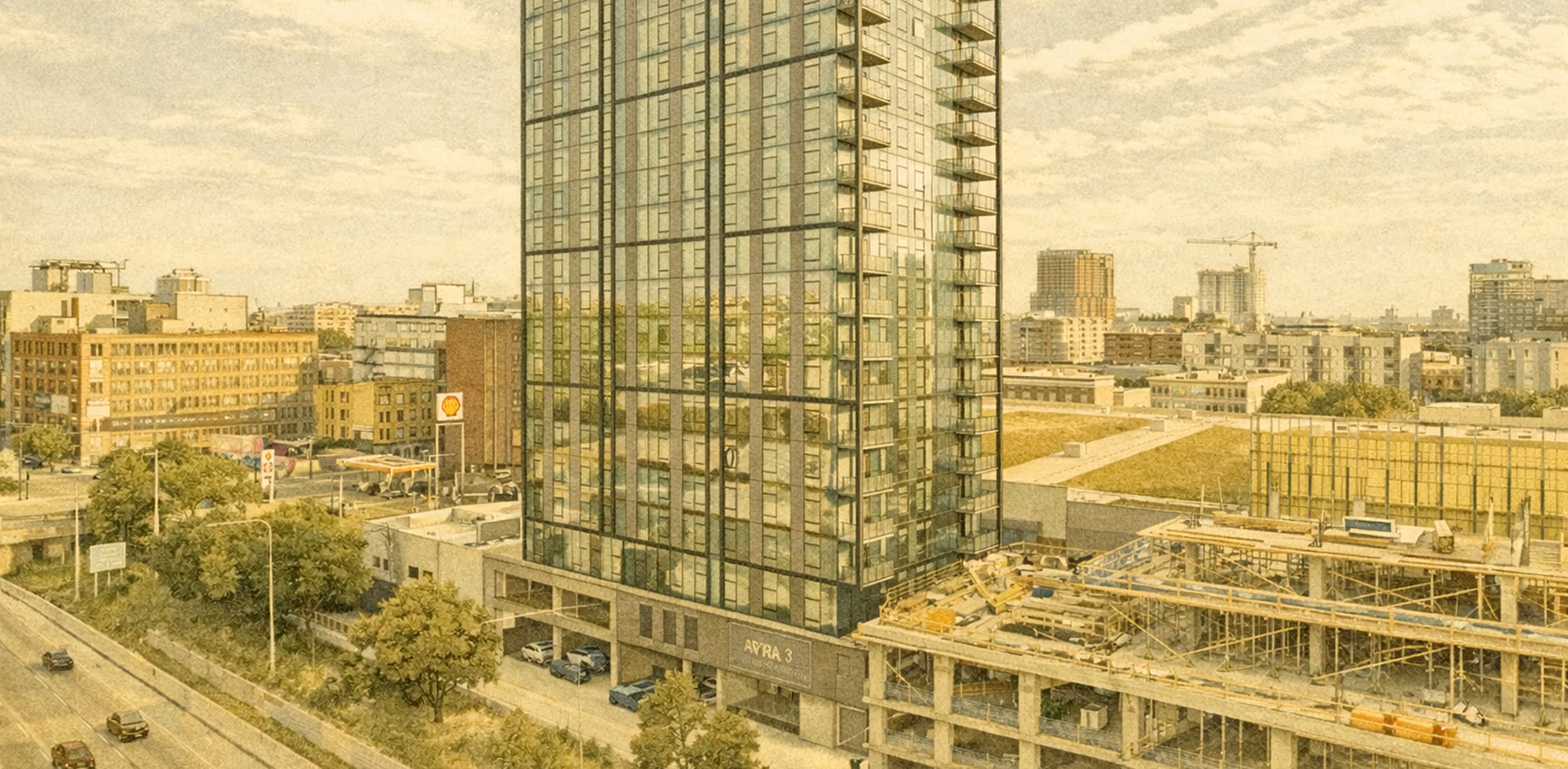
Quantitative Outcomes
After a suspension of construction due to the onset of Covid, the construction team rallied together, made up the lost time, and pushed through to deliver the building in spring 2021. Our main capital partner met the initial terms that were offered by our original institutional preferred equity partner that pulled out at the last moment because of pandemic uncertainty. Avra was another example of direct investments coming from relationship-based friends and family equity, not faceless institutional capital, including a preferred equity tranche.
This commitment to seeing the project through positioned Avra West Loop to capitalize on a strong leasing season with few other deliveries. Tandem’s in-house leasing team reached 95% occupancy in just eight months, right as winter set in, allowing strong positive operating cash flow just 20 months after construction started.
Investment Thesis
Provide a compact, premium product that competes on chunk-price rather than winning the war on amenities and features. The site was selected for its location on the edge of the country’s hottest submarket while providing the Illinois Medical District, an enormous anchor institution, its closest new construction Class-A building in true West Loop. If Avenir was our “first-class” airline seat, Avra was “economy plus”: still a premium product, but with constant, disciplined programmatic decisions made in stark contrast to the principles that guided our high-rise at Avenir.
Lessons Learned
Through the uncertainty of a pandemic, we stayed disciplined, sequencing trades, mitigating supply chain delays, and maintaining alignment across lenders, equity, and construction partners. The result was a tower that not only rose quickly but stabilized faster than expected. Avra made clear that even in volatile markets, disciplined execution wins and relationships are the engine that moves a project forward.
Development Context
Delivering Avra meant threading a needle across three tight parcels. We negotiated complex air-rights deals, balanced the demands of a dense, irregular-shaped site, mitigated risk for parking, and coordinated closely with our construction and design partners to fit a 20-story tower on a postage stamp. And then we built it during Covid, charging into the fire with construction starting in March 2020, building 198 units in a year where only 1,200 units were constructed.
Sage
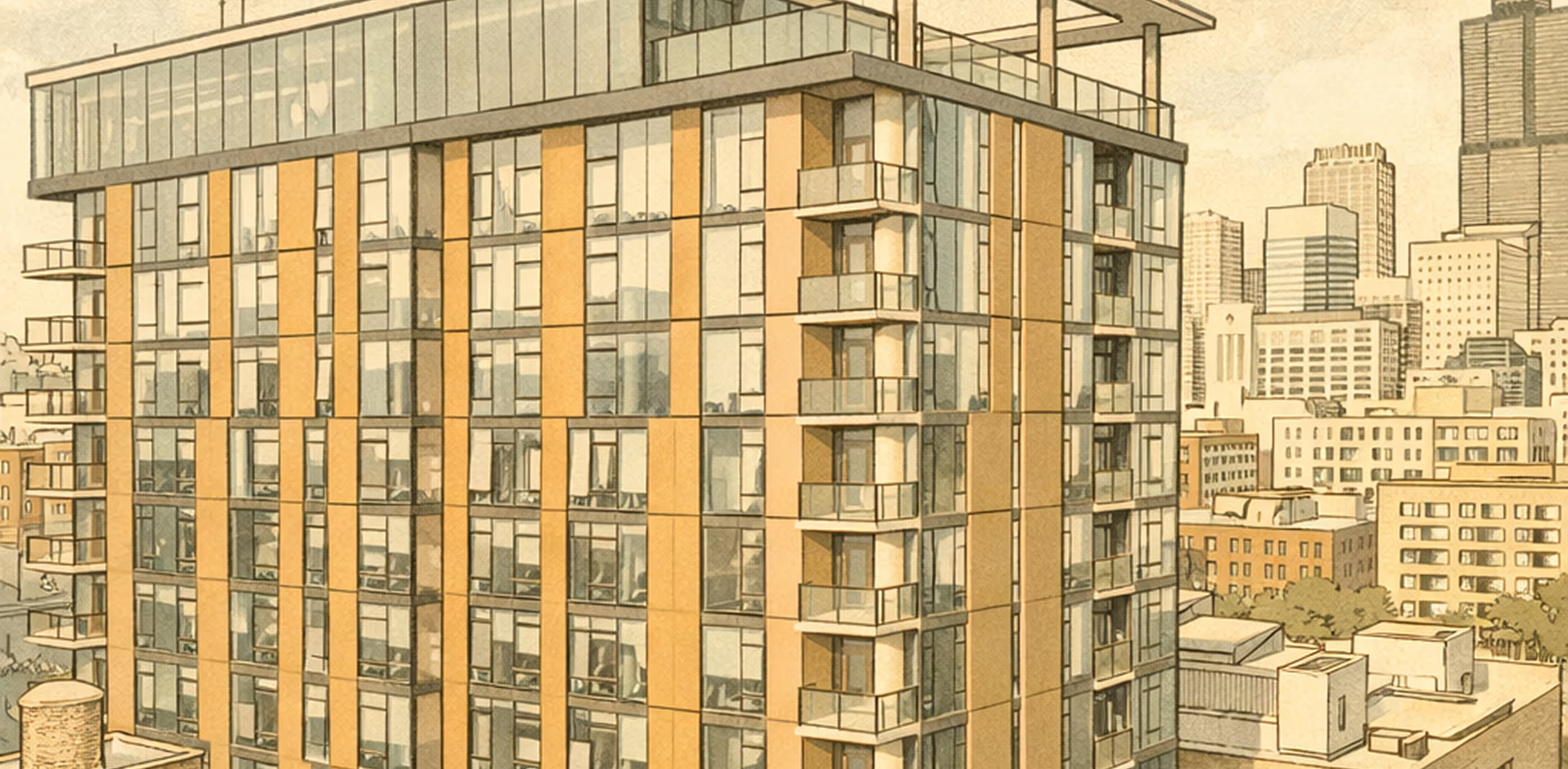
Development Context
We were the only group in Chicago to secure a HUD 221(d)(4) loan between 2021–2023, locking in rates just before their sharp rise. We also fixed construction costs by mid-2022, ahead of a once-in-a-generation construction inflation surge. Sage marked a shift from gut & instinct to experience & data. That shift gave us clarity under pressure and the conviction to commit long-term, a move validated when we bypassed the need to refinance entirely, all amid a time when rates climbed nearly fivefold.
Almost a full extra year of distributable cash from execution speed.
Investment Thesis
This is a project about “staying rich,” not “getting rich.” At the heart of the project was a financing strategy to assure returns and a mentality that this was a simple play in “clipping coupons” over trying to “scratch a lottery ticket.” If Avra was about simplification, Sage was about going back to basics, a meat-and-potatoes philosophy, a Ford F150-type of development. Control costs relentlessly and drive speed to stabilization ahead of the curve and leave no stone unturned, right through to the very end.
Quantitative Outcomes
Tandem’s integrated team invested thousands of hours preparing for construction alongside trusted trade partners in order to deliver in record time. The first temporary certificate of occupancy was issued 11 months after construction started, and the final certificate of occupancy was issued 4 months later.
The result: accelerated velocity that caught seasonal leasing at its peak and a building that completed lease-up just 19 months after breaking ground. Nearly a million dollars of extra cash flow was found this way. This equated to almost a full extra year of distributable cash, accelerating returns across almost all meaningful metrics. This speed was not modeled in our projections but simply captured an opportunity to eke out more yield where yield was possible.
Lessons Learned
Our All-in Ownership™ makes a difference in the market. By having an owner’s mindset, we were able to plan ahead for go-to-market roadblocks in every aspect of the design, construction, and even lease-up process. We mastered HUD 221(d)(4) financing as a durable edge, managed its complexity, and kept the project moving, built at pace, and launched lease-up early to accelerate results.
Common Threads.
Across these projects, different facts and conditions showed up, but three themes keep repeating.
Most Outcomes Are Decided Well Before Construction Starts
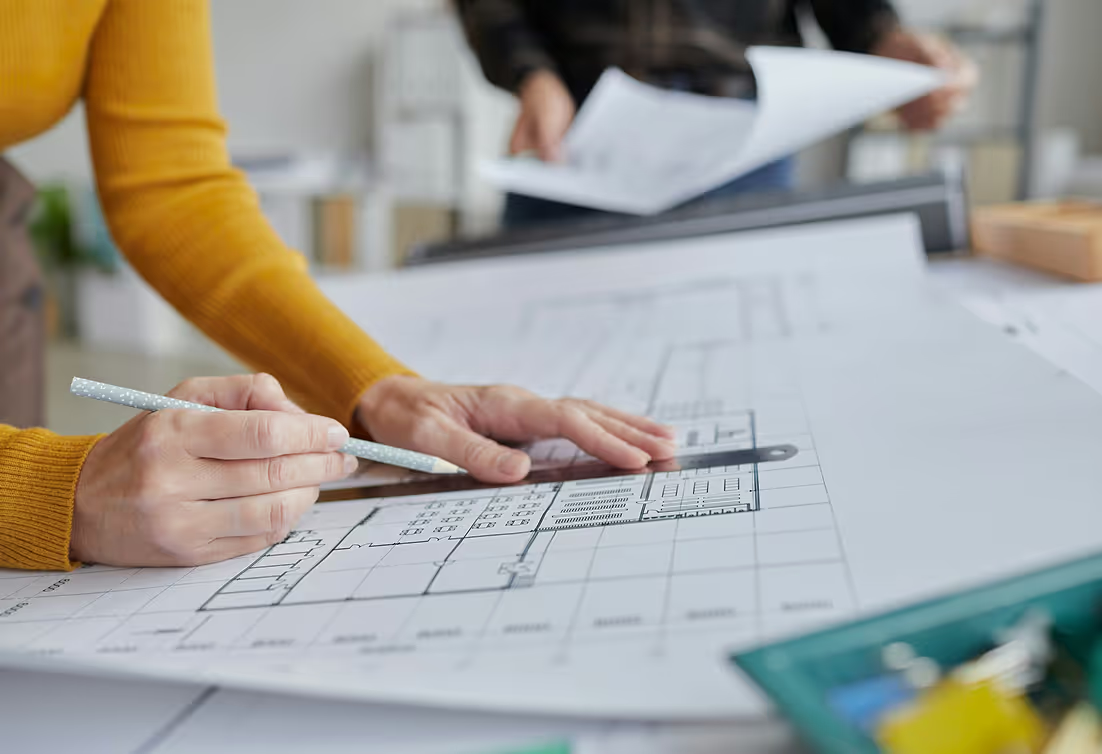
The biggest wins and losses rarely come from a single moment or action. They come from what gets locked in early: site control and terms, zoning path, unit mix, scope discipline, schedule assumptions, contingency, capital structure and partner selection. When those inputs are realistic, the project has room to breathe. When they are overly optimistic, the team spends the rest of the time trying to recover time, budget, and credibility.
Integration Reduces Friction and Surprises

Real estate is full of handoffs, and handoffs create gaps. Design, pricing, construction, leasing, operations. Each transfer is a chance for misalignment and a place where issues can hide until they become expensive. Keeping development, construction, and operations tightly connected helps problems surface earlier, decisions happen faster, and accountability stay clear. It is not about doing everything. It is about making fewer assumptions.
Durable Deals Don’t Require Perfect Conditions
Markets shift, timelines move, and information arrives late. The question is not whether the plan was “right.” It is whether the structure can absorb reality without forcing bad choices. Across our projects, the goal has been the same: keep decision paths simple, protect the downside, and avoid anything that only works if timing, rates, or sentiment cooperate. When conditions change, discipline matters far more than being right.
The work you’ve just seen was shaped in Chicago, but the same approach is carrying forward into what we are building next.
The Kamingo
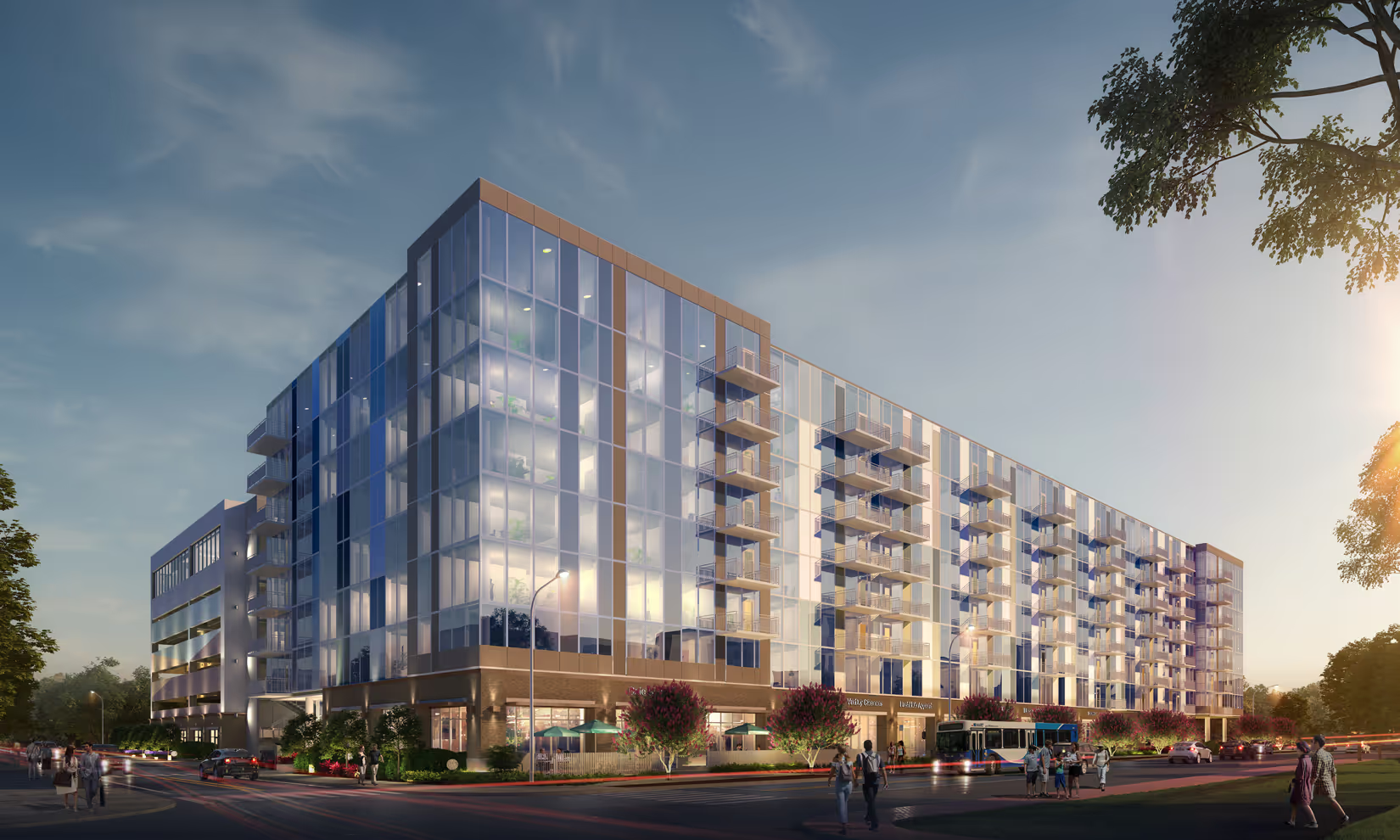
The Kamingo sits inside a Qualified Opportunity Zone—so for investors reallocating capital gains, a 10+ year hold can translate into meaningful tax advantages on the back end. The project is fully entitled, permit-ready, and backed by a locked GMP. We are anchoring the capital stack around HUD 221(d)(4) financing: long-term, fixed-rate construction-to-permanent debt built to reduce refinance risk and create real certainty around the cost of capital.
This is exactly the kind of “before hindsight” moment we look for: real work done up front, a conservative capital structure, and a long runway to let the neighborhood and the asset compound quietly over time.
There is real work ahead, and there is still room for the kind of thoughtful planning that makes the difference later. That is also what makes it a useful next step in this series. It is not a finished story. It is an active one. A chance to see how we set a project up before the easier part of hindsight arrives.
If the timing is not right to engage now, that is fine. Good partnerships tend to form at the right pace, not on a schedule. Sometimes the first step is simply getting familiar with how the other side thinks, then staying in touch as the work progresses. A project becomes a context for that relationship, not a transaction that forces a decision.
Fully entitled, permit-ready, and backed by a locked GMP with HUD 221(d)(4) loan secured.
If you would like to take a closer look at Kamingo, click on the button below to access the deal room. We can also set up a brief call to walk through the structure, especially whether the QOZ fit is clean for a specific capital gains timeline. If not, we appreciate you taking the time to review the work and understand our approach. Either way, the door stays open.
Access Deal RoomThank you for your time.
The goal of this series was to bring our perspective and our work into focus. To show the decisions behind the outcomes, and the tradeoffs that shaped them, so you can form your own view of how we operate. We hope that it came through clearly.
Good partnerships tend to build over time, and timing has a way of sorting itself out. If you’d like to connect now, we’d welcome it. If you’d rather watch from a distance for a while, that is perfectly fine.
Thanks again for spending some time with our work.